Common dental injuries in children include chipped, cracked, loosened, pushed-in, and knocked-out teeth, as well as cuts to the lips and gums. They happen fast. A toddler may fall off the couch, a soccer ball may hit a child’s mouth, or a scooter ride may end in a fall. With prompt evaluation and appropriate care, …


Common dental injuries in children include chipped, cracked, loosened, pushed-in, and knocked-out teeth, as well as cuts to the lips and gums. They happen fast. A toddler may fall off the couch, a soccer ball may hit a child’s mouth, or a scooter ride may end in a fall. With prompt evaluation and appropriate care, many injured teeth can be treated successfully.
At One Tooth Pediatric Dental, injury care depends on the child’s age, whether a primary or permanent tooth is involved, and how the tooth and surrounding tissues heal over time. Here’s what parents should know about first aid, emergency signs, treatment, and prevention.
What Are the Most Common Dental Injuries in Children?
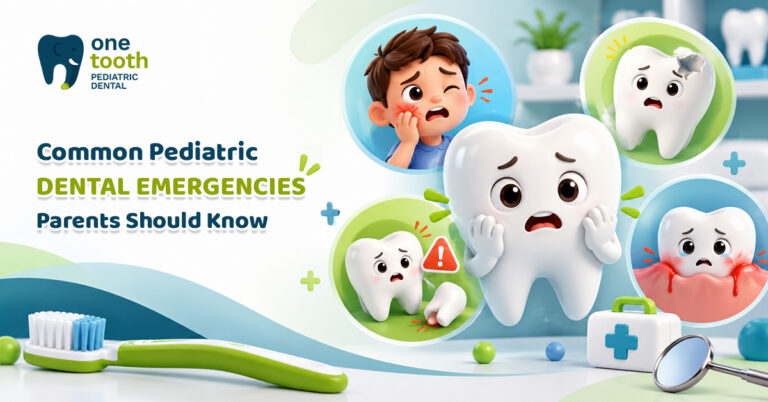
Common dental injuries in children include chipped or fractured teeth, loose or displaced teeth, and knocked-out teeth. Falls, sports, playground accidents, and bicycle or scooter crashes are frequent causes. Young children commonly injure primary front teeth, while older children often injure permanent front teeth.
Types of Dental Injuries
- Enamel and Crown Fractures: A chip can involve enamel only or penetrate deeper, making the tooth sensitive and/or leaving a pink spot.
- Root Fracture: A fracture below the gumline may not be visible. The dentist may use dental X-rays and a clinical examination to diagnose it.
- Tooth Displacement: A tooth may become tender or loose, shift sideways, move partly out of its socket, or be pushed into the gums.
- Tooth Avulsion: The whole tooth and root are out of the socket, and if it is a permanent tooth, it must be cared for immediately.
What Should Parents Do Right After a Child’s Dental Injury?
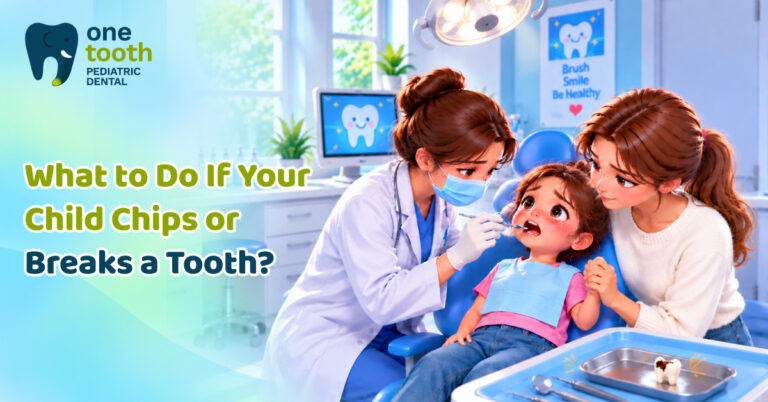
Stay calm and check for other injuries. Rinse the mouth gently with water, apply clean gauze with firm pressure to bleeding areas, and place a cold compress on the outside of the face to help reduce swelling. Look for any missing tooth or fragment and contact a pediatric dentist promptly for instructions.
Signs a Child Needs Emergency Dental Care:
- Medical Emergency Signs: Call 911 for trouble breathing, loss of consciousness, or other life-threatening symptoms. Seek urgent medical evaluation for repeated vomiting, confusion, a suspected jaw fracture, or signs of a serious head injury.
- Uncontrolled Bleeding: Seek urgent care if bleeding is heavy or does not stop with continuous firm pressure.
- Severe Tooth Damage: A knocked-out permanent tooth, visible pulp in a broken tooth, or a displaced tooth needs same-day pediatric emergency dentistry.
Should a Knocked-Out Tooth Be Put Back In?
It depends on the tooth. A knocked-out baby tooth should never go back in, because replanting it can damage the permanent tooth developing underneath. A knocked-out permanent tooth should be replanted immediately when it can be done safely. If that is not possible, keep the tooth moist and seek emergency dental care at once. The prognosis becomes less favorable when the tooth remains dry, especially after 60 minutes.
How to Handle a Knocked-Out Permanent Tooth?
- Hold the Crown: Parents should pick up the tooth by the white chewing part, never by the root, to protect delicate root cells.
- Rinse Gently: If the tooth is dirty, rinse it briefly with milk, saline, or cold running water. Do not scrub the tooth, use soap, or touch the root.
- Replant or Store: If you are certain it is a permanent tooth and replantation can be done safely, gently place it back in the socket in the correct direction. Otherwise, place it in milk or an approved tooth-preservation solution and seek emergency dental care immediately.
- Get Care Fast: The pediatric dentist repositions the tooth and stabilizes it with a flexible dental splint while the periodontal ligament heals.
How Do Pediatric Dentists Treat Injured Teeth?
Treatment depends on the type of injury and whether it involves primary or permanent teeth. Pediatric dentists start with an exam and digital X-rays. Then they may bond a chip, place a crown, splint a loose tooth, or provide pulp therapy. If a tooth cannot be treated successfully, extraction may be considered based on the type of tooth, the injury, and the effect on surrounding tissues and developing teeth.
Treatment Options After Dental Trauma
- Restorative Dentistry: Tooth-colored materials may repair some small chips, while a white or stainless steel crown may be recommended for a more extensively damaged baby tooth.
- Dental Splints: A thin, flexible splint holds a loose, displaced, or replanted tooth steady while the supporting tissues heal.
- Pulp Therapy: When an injury exposes or damages the pulp, treatment may help preserve the tooth and, in some young permanent teeth, allow the root to continue developing.
- Extraction and Space Management: A severely damaged baby tooth may need to be removed. Whether a space maintainer is needed depends on which tooth was lost, the child’s age, and dental development.
How Can Parents Prevent Dental Injuries in Children?
Parents can prevent many dental injuries with mouthguards, helmets, childproofing, and regular checkups. An injury to a primary tooth can sometimes affect the permanent tooth developing underneath. Possible effects include enamel discoloration, changes in tooth shape, or an altered eruption pattern.
Dental Injuries Prevention Tips
- Sports Mouthguards: Custom or boil-and-bite mouthguards cushion the teeth during basketball, soccer, baseball, hockey, and other contact sports.
- Helmets and Car Seats: Well-fitted helmets and age-appropriate car seats lower the risk of serious facial and dental trauma.
- Home Childproofing: Padding furniture corners, gating stairs, and supervising climbing protect toddlers while they’re still learning to balance.
- Follow-Up Care: After a dental injury, attend all recommended follow-up visits so the dentist can monitor healing and identify complications that may develop over time.
How Does One Tooth Pediatric Dental Help Children After a Dental Injury?
One Tooth Pediatric Dental evaluates dental injuries and helps families understand the next steps. When needed, the team uses digital X-rays to assess damage that may not be visible during the examination and explains treatment in clear, age-appropriate language.
Pediatric Emergency Dentistry Built Around Each Child
- Prompt Evaluations: Contact the office after a dental injury so the team can determine how urgently your child should be seen.
- Trauma-Aware Comfort: A calm welcome, gentle numbing, and simple explanations help frightened children feel safe enough to receive care.
- Individualized Support: The team can adjust communication and pacing based on the child’s needs. When additional support is necessary, appropriate treatment options are discussed with the family.
- Board-Certified Care: Dr. Akshay Kolluri is a board-certified pediatric dentist with training in evaluating and treating dental injuries in children.
If a child has experienced one of the common dental injuries in children, contact One Tooth Pediatric Dental in Annapolis for a calm, prompt evaluation and clear next steps.
Frequently Asked Questions
1. What is the most common dental injury in children?
Fractures and tooth-displacement injuries are common, but the type of injury varies by age and how the accident occurred. Young children frequently injure primary front teeth, while older children often injure permanent front teeth.
2. What should parents do when a child chips a tooth?
Rinse the mouth with water, save any broken piece in milk, apply a cold compress, and call the pediatric dentist the same day.
3. What should parents do if a child’s permanent tooth gets knocked out?
Hold it by the crown, rinse briefly, and replant it or store it in milk. Reach a dentist within 30 to 60 minutes.
4. Should a knocked-out baby tooth be put back in?
No. Replanting a baby tooth can damage the permanent tooth forming underneath. Control bleeding with gauze and call the pediatric dentist.
5. When should a child see a pediatric dentist after a dental injury?
Contact a pediatric dentist after a dental injury, even if the damage appears minor. The dental team can determine whether your child needs immediate, same-day, or routine follow-up care.