Nobody's ready for a dental emergency at 8 p.m. on a Tuesday. But when something goes wrong with your child's tooth, knowing what to do makes all the difference. Understanding the most common pediatric dental emergencies helps parents act fast, keep their child calm, and protect that growing smile. At One Tooth Pediatric Dental, every …


Nobody’s ready for a dental emergency at 8 p.m. on a Tuesday. But when something goes wrong with your child’s tooth, knowing what to do makes all the difference. Understanding the most common pediatric dental emergencies helps parents act fast, keep their child calm, and protect that growing smile.
At One Tooth Pediatric Dental, every call and every visit starts with one simple goal: figure out what’s going on and help your child feel safe. This guide covers what counts as urgent, what to do right away at home, and when to call. The goal is to help parents respond calmly and know when to seek professional care.
What Counts as a True Pediatric Dental Emergency?
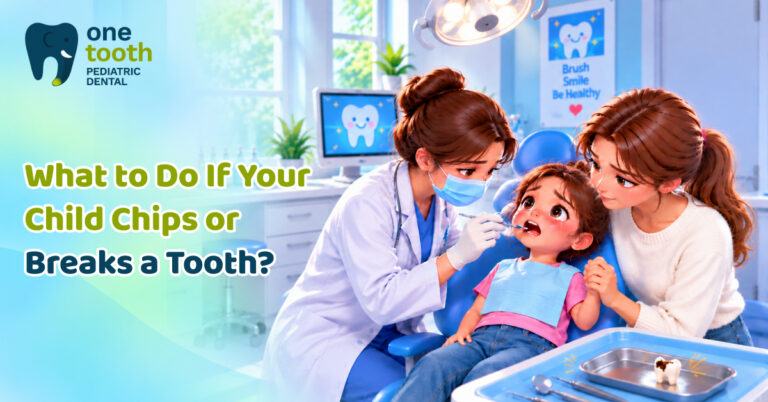
Not every dental issue needs a same-day visit, but some absolutely do. A small chip may not require immediate treatment, but parents should still contact the dentist for guidance. A knocked-out permanent tooth requires immediate action. Knowing the difference can save your child a lot of pain.
Signs a Child Needs Urgent Care:
- Knocked-out permanent tooth: The clock starts immediately, so getting to the dentist fast greatly improves the chances of saving it.
- Severe pain or swelling: Persistent pain, facial swelling, or fever may indicate an infection that needs prompt evaluation. Seek emergency medical care if swelling affects breathing or swallowing, spreads toward the eye, or is accompanied by serious illness.
- Uncontrolled bleeding: Apply firm, gentle pressure with clean gauze. Seek urgent medical care if bleeding is heavy or does not stop.
- Fracture with pulp exposure: If the break looks pink or red inside, the nerve is involved and needs care today.
What Are the Most Common Types of Pediatric Dental Emergencies?
Kids fall. They eat things they shouldn’t. They collide on the playground. The types of pediatric dental emergencies that pediatric dentists see most often are more common than most parents expect.
Emergencies Parents Should Recognize:
- Toothaches: A child who keeps touching the same spot or won’t chew on one side may have decay, a crack, or an infection.
- Facial or gum swelling: Any puffiness around the jaw or gum line needs a same-day look, since infections can spread quickly.
- Chipped or broken teeth: Playground falls, sports impacts, and biting into something hard can all crack or chip enamel fast.
- Knocked-out permanent tooth: This is a time-sensitive emergency that requires immediate action. Tooth discoloration after an injury: A tooth that turns gray or dark should be evaluated, although the timing and treatment depend on the child’s symptoms and the type of tooth.
What Are the Key Child Dental Emergency Signs at Home?
Recognizing warning signs can help parents seek care before pain, infection, or an injury becomes more difficult to manage.
Warning Signs Worth a Closer Look
- Night pain: Pain that wakes a child or prevents sleep deserves prompt dental guidance. Seek urgent care sooner if the pain is accompanied by facial swelling, fever, uncontrolled bleeding, or difficulty breathing or swallowing.
- One-sided chewing: A kid who only chews on one side is often avoiding a sore, cracked, or sensitive tooth on the other.
- Color changes: A tooth that turns gray or dark after a bump often means the nerve inside took a hit from the trauma.
- Swelling or bumps on the gums: A small pimple-like bump near a tooth is usually a sign of an abscess needing prompt attention.
What Should Parents Do Immediately at Home?
Before the drive to the dentist, a few simple steps can protect a tooth and ease a child’s discomfort. Keeping this emergency dental visit checklist somewhere will help you provide first aid during a dental emergency at home.
First-Aid Steps Before the Visit
- Rinse gently: Have your child rinse with warm water to clear out any debris and get a better look at the injury.
- Control bleeding: Press a clean piece of gauze against the area and hold it gently until the bleeding slows or stops.
- Protect the tooth: Confirm that it is a permanent tooth and hold it only by the crown. If it is dirty, gently rinse it with milk, saline, or the child’s saliva without scrubbing the root. If possible, place it back into the socket. If that is not possible, keep it in milk or another recommended storage solution and seek immediate dental care. Never replant a baby tooth.
- Ease discomfort: A cold compress on the outside of the cheek and a child-safe pain reliever can take the edge off until help is available.
What Should Parents Avoid Doing During an Emergency?
Good instincts don’t always match good dental first aid. A few well-meaning moves can actually make things harder for the dentist to fix.
Common Missteps to Skip
- Never scrub the root: Scrubbing a knocked-out tooth removes the fragile cells the dentist needs to reattach it successfully.
- Never replant a baby tooth: Pushing a knocked-out baby tooth back into the socket can seriously damage the adult tooth growing beneath it.
- Skip aspirin directly on gums: Pressing a pain tablet against the gum doesn’t help and can actually burn the soft tissue.
- Contact the dentist for guidance: Do not delay care for facial swelling, persistent or severe pain, fever, uncontrolled bleeding, or a significant dental injury.
How Do Baby Tooth and Permanent Tooth Emergencies Differ?
The treatment plan changes a lot depending on which teeth are hurt. Whether the injury involves primary teeth or permanent teeth matters, and protecting the adult tooth underneath is always part of the picture.
Key Differences Parents Should Know
- Baby tooth priority: The main goals are easing the child’s discomfort and making sure the permanent tooth growing below stays unharmed.
- Permanent tooth priority: Once a permanent tooth is involved, saving the natural tooth becomes the top priority whenever possible.
- Reimplantation rules: Dentists will act fast to replant a knocked-out permanent tooth but will never put a knocked-out baby tooth back in.
- Follow-up care: Depending on the injury, the dentist may recommend follow-up examinations or X-rays to monitor healing, pulp health, root development, and the permanent tooth developing beneath an injured baby tooth.
Which Emergency Matches Which Treatment?
Every emergency has a path forward. This quick reference helps parents know how urgent the situation is and what kind of care the dentist will likely discuss.
|
Emergency |
Urgency Level |
Likely Treatment Path |
|
Toothache |
Contact the dentist promptly; urgency depends on symptoms | Examination and treatment based on the cause |
| Facial swelling or suspected abscess | Urgent, preferably the same day |
Evaluation and treatment based on the source and severity of the infection |
|
Chipped or fractured tooth |
Contact the dentist for guidance | Smoothing, bonding, fragment reattachment, or another restoration depending on the injury |
| Fracture with pulp exposure | Urgent, preferably the same day |
Evaluation; treatment may include vital pulp therapy and restoration |
|
Knocked-out permanent tooth (avulsion) |
Emergency, act now |
Reimplantation and stabilization |
When Might a Child Need Sedation or Hospital Care?
Some kids need a little extra support to get through emergency dental care. That’s not unusual, and it doesn’t mean anything is wrong with your child. If a child needs urgent treatment but has significant anxiety, difficulty cooperating, complex medical needs, or an extensive injury, the dentist will determine what type of behavior guidance or sedation is appropriate and where treatment can be provided safely.
Signs Extra Comfort Support Fits Best
- High anxiety: Nitrous oxide or gentle behavior guidance helps a very nervous child get through emergency treatment without being overwhelmed.
- Extensive treatment: Sedation or general anesthesia may be considered when a child cannot safely complete necessary treatment while awake.
- Medical considerations: Some health conditions require additional monitoring or treatment in a setting equipped for the child’s medical needs.
- Sensory or developmental needs: The team considers each child’s communication, sensory, and behavioral needs when planning care.
How Does One Tooth Pediatric Dental Help Choose the Right Treatment?
When a child comes in hurt or scared, Dr. Akshay Kolluri and the team at One Tooth Pediatric Dental slow things down. Every recommendation is built around that specific child, not a one-size-fits-all approach.
How the Right Plan Comes Together:
- Child-first thinking: The team looks at the child’s age, injury pattern, comfort level, and tooth type before making any recommendations.
- Least-invasive approach: The gentlest option that fully protects the tooth and the child’s long-term health always comes first.
- Evidence-based care: Every decision follows current pediatric dental trauma guidelines and safety standards proven to work for kids.
- Honest guidance: Parents get a clear, no-pressure explanation of every option so they can make confident decisions for their child.
If your child has dental pain, swelling, uncontrolled bleeding, or an injured tooth, contact One Tooth Pediatric Dental for guidance. Seek emergency medical care for trouble breathing or swallowing, loss of consciousness, significant facial trauma, or other serious symptoms.
Frequently Asked Questions
1. How do parents know if a toothache is a true emergency?
Pain that wakes a child up, comes with swelling or a low fever, or doesn’t ease after a few hours of home care needs same-day attention.
2. Can a knocked-out baby tooth be put back in?
No. Putting a knocked-out baby tooth back in the socket can damage the adult tooth developing right underneath it, so dentists always leave it out.
3. Why does a child’s tooth turn gray after a fall?
Gray discoloration usually means the nerve inside the tooth was injured by the impact. A dentist needs to check whether it requires monitoring or treatment.
4. How long can a knocked-out permanent tooth survive outside the mouth?
Ideally, no more than an hour. Keep it in cold milk right away and head straight to a dentist to give it the best chance of being saved.
5. Does a chipped baby tooth need to be examined?
Yes. A dentist should evaluate the injury, but a small chip does not always require treatment. The recommendation depends on the depth of the fracture, symptoms, and whether other injuries are present.