One second your child is laughing on the playground, and the next, you are looking at a chipped tooth and trying not to panic. Dental injuries are common in children, and many chipped or broken teeth can be treated successfully. At One Tooth Pediatric Dental, Dr. Akshay Kolluri and the team take a close look …


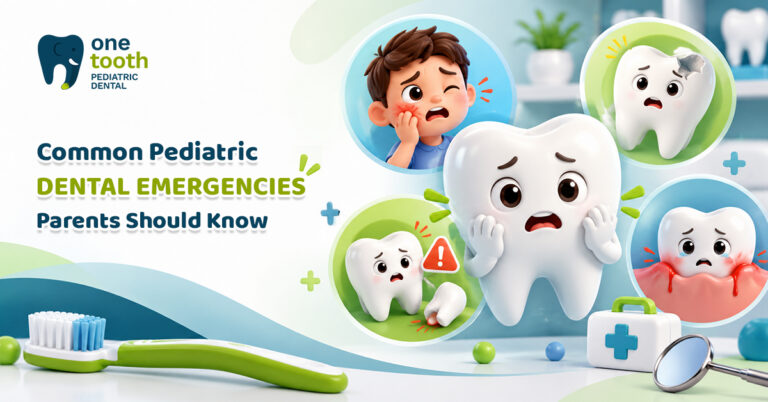
One second your child is laughing on the playground, and the next, you are looking at a chipped tooth and trying not to panic. Dental injuries are common in children, and many chipped or broken teeth can be treated successfully.
At One Tooth Pediatric Dental, Dr. Akshay Kolluri and the team take a close look at the injury, the child’s age, how the teeth are developing, the pain level, and overall oral health before suggesting any treatment. This guide explains what to do right away, when the injury needs urgent care, and which treatments a pediatric dentist may recommend.
What Should Parents Do Right After a Tooth Breaks?
The first few minutes after a tooth chips or breaks really do matter. Here’s how to stay steady and give that tooth the best chance.
First Steps to Take Right Away
- Stay calm: Kids take their cues from parents – a steady, calm presence helps a frightened child settle down fast.
- Rinse gently: A warm water rinse clears the mouth so parents can see the dental trauma and any loose debris.
- Ease the pain: A cold compress held gently against the cheek reduces swelling and helps with tenderness on the way in.
- Save a broken piece: If you find the tooth fragment, place it in milk or water and bring it to the dentist. Act immediately for a knocked-out permanent tooth: Hold the tooth by the crown, not the root. If it is dirty, rinse it briefly without scrubbing. If possible, place it back in the socket. If that is not possible, keep it in milk or saline and seek emergency dental care immediately. Never replant a baby tooth.
What Causes Chipped Teeth in Kids?
Kids are active, and accidents happen – but some situations come up more often than others. Understanding the common causes of chipped teeth in children helps parents spot and reduce the risks.
Common Causes of Chipped Teeth in Children:
- Playground falls: Trips, tumbles, and slides send kids face-first into hard surfaces more often than most parents expect.
- Sports injuries: Contact sports and other activities with a risk of falls or collisions can injure both baby and permanent teeth, especially when a child is not wearing a properly fitted mouthguard.
- Hard foods and objects: Biting ice, hard candy, popcorn kernels, or nonfood objects can chip or fracture a tooth.
- Weakened teeth: Tooth decay and certain enamel defects can make a tooth more likely to break.
How Serious Is the Tooth Injury?
A small enamel chip is different from a deep fracture or a tooth that has been knocked out. The dentist will examine the tooth, surrounding tissues, and developing roots to determine the urgency and appropriate treatment.
|
Injury Type |
What It May Look Like | Symptoms to Watch | Urgency Level | Likely Next Step |
| Minor chip | Small rough edge or missing corner | Often little or no pain, although the edge may feel rough | Contact the dentist for guidance |
The tooth may only need monitoring or smoothing, or it may need bonding |
|
Deeper fracture |
Pain, sensitivity, bleeding from inside the tooth, or a large missing piece | Pain, sensitivity, possible pulp exposure | Prompt or urgent evaluation | Treatment depends on the fracture depth, pulp involvement, tooth type, and stage of root development |
| Knocked-out tooth | Empty socket and missing tooth | Bleeding, swelling, or distress | Emergency for a permanent tooth; prompt evaluation for a baby tooth |
Replant a permanent tooth immediately when possible or store it in milk or saline. Never replant a baby tooth. |
How Can Parents Tell If It’s a Real Emergency?
Some dental injuries need immediate attention, while others can be evaluated during a prompt dental visit. Call a pediatric dentist right away if your child has severe pain, uncontrolled bleeding, a loose or displaced tooth, a deep fracture, or a knocked-out permanent tooth. Seek emergency medical care for loss of consciousness, trouble breathing or swallowing, uncontrolled bleeding, or a serious facial or head injury.
Signs the Injury Needs Urgent Care:
- Severe pain: Constant or throbbing pain that won’t ease up usually points to a deeper injury that needs attention today.
- Heavy bleeding: Bleeding that keeps going after a few minutes of gentle pressure means the child needs to be seen quickly.
- Loose or displaced tooth: A tooth that’s wobbling or pushed out of position needs prompt evaluation before things shift further.
- Gingival swelling or fever: Swelling around the gums or jaw paired with a fever may signal infection – same-day care matters here.
Does a Broken Baby Tooth Need Different Care Than a Permanent Tooth?
The short answer is yes – the type of tooth changes the whole approach. Here’s what parents need to know about primary versus permanent tooth injuries.
Baby Tooth Versus Permanent Tooth Care:
- Primary teeth injuries: The dentist checks the gum carefully and looks at how the adult tooth below the break is doing.
- Permanent tooth injuries: Prompt treatment can improve the chance of preserving the tooth, especially when it has been displaced or knocked out.
- Never push it back: A knocked-out baby tooth should never be pushed back into the socket, since that can injure the developing adult tooth.
- Spacing support: If a baby tooth is lost early, the dentist will evaluate whether a space maintainer is appropriate based on the tooth involved, the child’s age, the bite, and the development of the permanent tooth.
What Should Parents Avoid Doing at Home?
It’s tempting to jump in and fix things, but a few well-meaning moves can actually make the situation worse. Here’s what to skip until the dentist takes a look.
Common Mistakes to Skip:
- Skip household glue: Never use any adhesive to reattach a broken piece – it can damage both the tooth and the gum tissue.
- Avoid aspirin on gums: Pressing a pain reliever pill directly onto the gum burns the tissue and doesn’t ease the pain the way parents hope.
- Don’t brush off small chips: A tiny chip can hide a deeper fracture underneath, so even minor breaks deserve a quick dental check.
- No crunchy snacks: Hard or chewy foods near the injured tooth can make a small break much worse before the appointment.
What Are the Treatment Options for a Chipped Tooth in a Child?
Treatment depends on whether the injured tooth is a baby or permanent tooth, the depth of the fracture, whether the pulp is exposed, and how the tooth and its roots are developing.
Treatments That Repair Little Smiles
- Smoothing or bonding: A minor chip may only need smoothing or repair with tooth-colored bonding material.
- Composite filling or crown: A larger fracture may need a composite restoration or a white or stainless steel crown.
- Pulp treatment: If the injury involves the pulp, the dentist will evaluate whether pulp treatment can help preserve the tooth.
- Extraction: Removal may be recommended when a tooth cannot be restored safely or when keeping it could cause pain, infection, or other problems.
How Can Parents Help a Scared Child Stay Calm?
A nervous child can make a tough moment feel even tougher. The right words and small comforts go a long way before, during, and after the visit.
Comfort Tools That Ease Fear:
- Stay reassuring: A calm, warm tone from a parent helps a scared child feel safe well before treatment even starts.
- Keep explanations simple: Short, honest answers work better than long ones – they ease worry without adding new things to be afraid of.
- Bring something familiar: A favorite stuffed animal, blanket, or toy gives a nervous child something comforting to focus on.
- Ask about comfort options: If a child is very anxious or needs extensive treatment, the dentist may discuss behavior guidance or sedation based on the child’s needs, health history, and planned procedure.
How Does One Tooth Pediatric Dental Help Choose the Right Treatment?
At One Tooth Pediatric Dental, comfort leads every decision. The team brings honest, pressure-free guidance to every tooth injury case – no rushing, no guessing. If you’re looking for an Emergency Pediatric Dentist Nearby Annapolis, understanding how treatment decisions are made can help you know when your child’s dental injury needs prompt evaluation.
How the Right Plan Comes Together:
- Child-first thinking: The team considers age, tooth type, and how serious the injury is before recommending any treatment path.
- Least-invasive first: Gentler fixes always come first, with deeper treatment reserved for situations where it’s clearly explained and truly needed.
- Evidence-based choices: Every recommendation follows current pediatric dental trauma guidelines and proven safety standards for children.
- Prompt guidance: If your child chips, breaks, or knocks out a tooth, call One Tooth Pediatric Dental for guidance on how quickly the injury should be evaluated.
If your child has injured a tooth, contact One Tooth Pediatric Dental. Our team can help you determine the next step and provide care based on the type and severity of the injury.
Frequently Asked Questions
1. Is a chipped baby tooth a real emergency?
Not always – but it’s worth a prompt check, since even small chips can sometimes hide deeper dental trauma below the surface.
2. How quickly should a child see the dentist after breaking a tooth?
Same day is best when there’s pain, bleeding, or a knocked-out tooth. Fast care gives the tooth the best shot at a full recovery.
3. Can a broken permanent tooth be saved?
Yes, in many cases. Bonding, a composite filling, a crown, or pulp therapy can all help – especially when the dentist sees the child quickly.
4. What should parents do if a permanent tooth gets knocked out completely?
Pick it up by the crown, not the root. If it is dirty, rinse it briefly without scrubbing. Place it back in the socket immediately if possible. If you cannot replant it, keep it in milk or saline and seek emergency dental care right away. Do not replant a knocked-out baby tooth.
5. How can parents prevent tooth injuries in active kids?
A properly fitted mouthguard during sports, appropriate protective equipment such as a helmet, and avoiding chewing ice or hard objects can reduce the risk of injury. Regular dental visits and preventive care also help identify decay or enamel defects that may weaken a tooth.